
The Roof Maintenance Checklist Every Dallas-Fort Worth Homeowner Needs
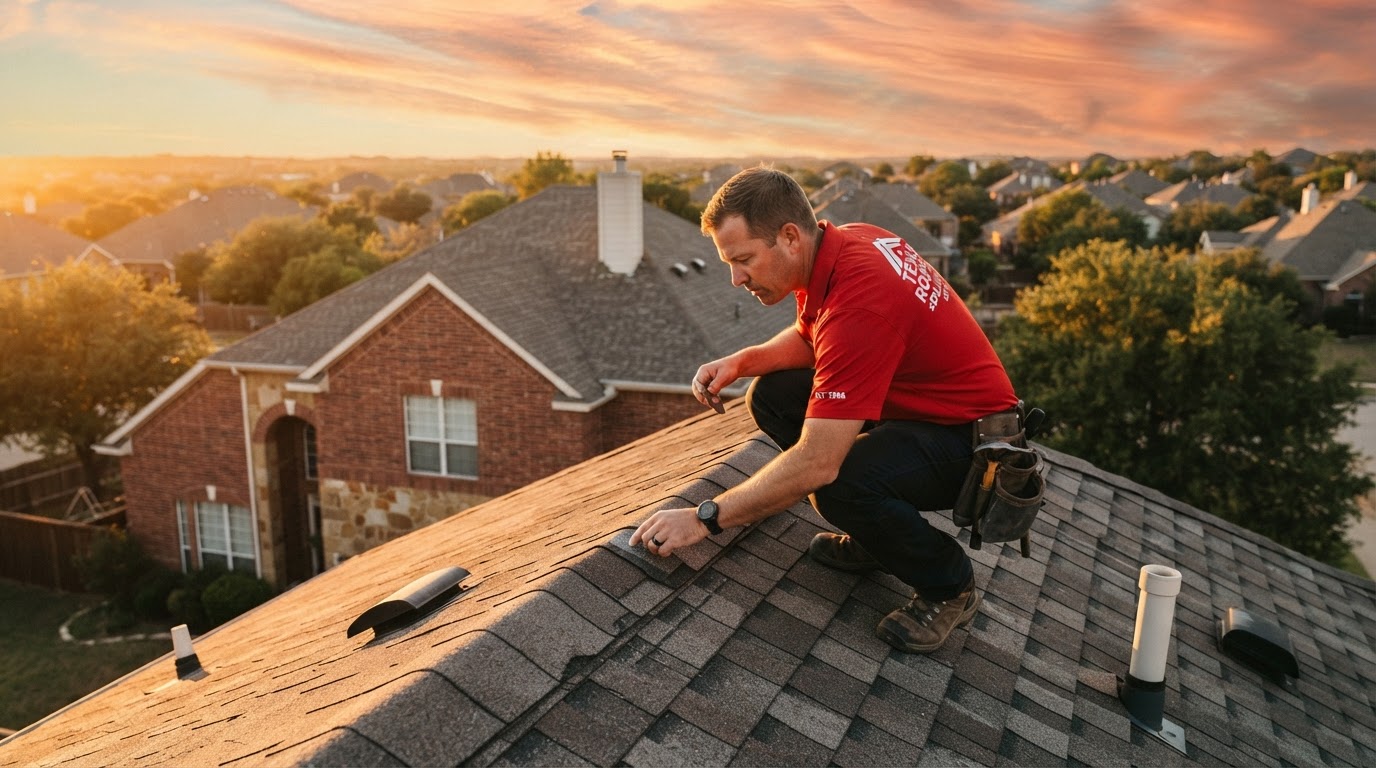
DFW homeowners should inspect their roof twice a year — in spring before storm season and in fall after summer heat — plus after every major hail or wind event. Key tasks: clear gutters and downspouts, check flashing around chimneys and vents, look for missing or damaged shingles, trim overhanging branches, and verify attic ventilation. Catching small issues early prevents the expensive repairs North Texas weather loves to cause.
The $400 Boot vs. the $4,000 Deck
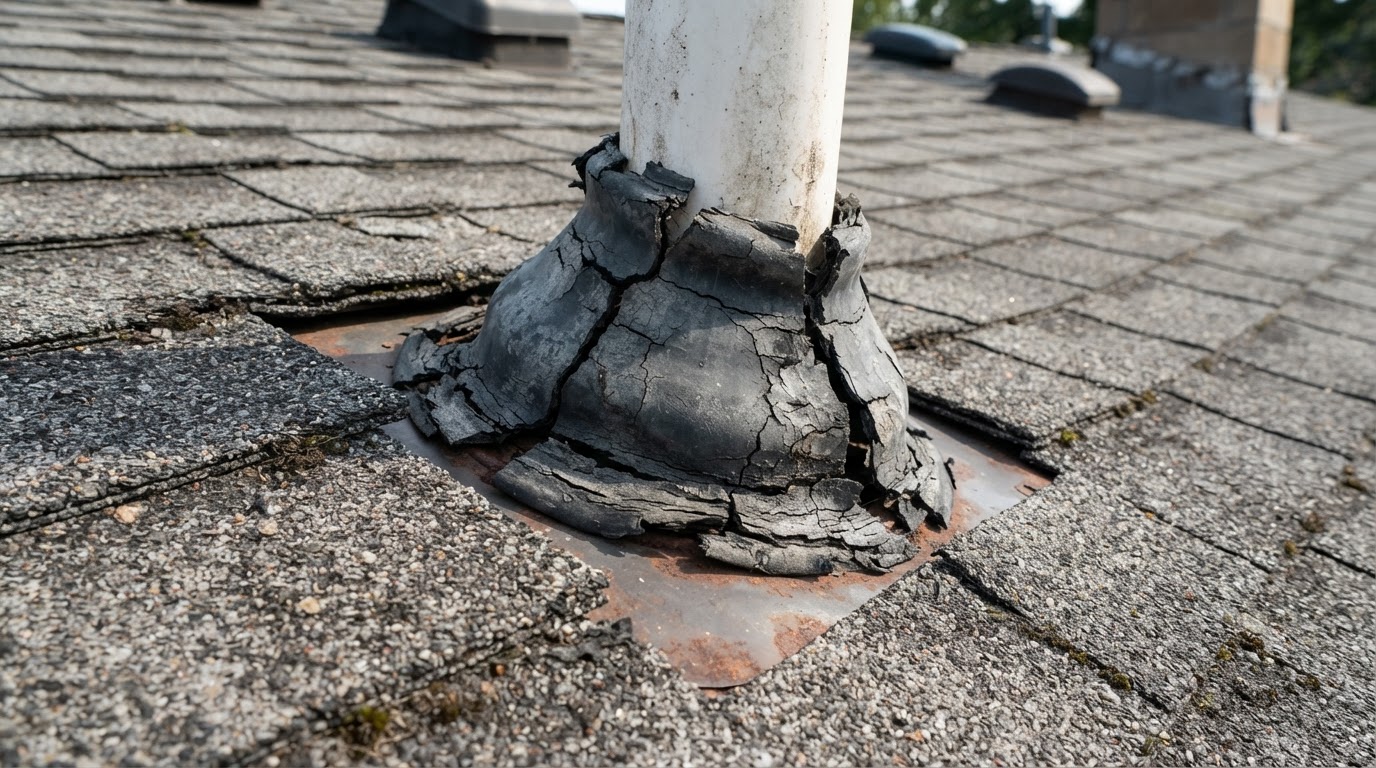
A homeowner in Prosper ignored a $400 repair — a cracked rubber pipe boot, the little collar where a vent pipe pokes through the roof. Texas UV had baked it brittle. Two rainy seasons later, water had been dripping through that cracked boot, silently rotting the decking around it. The fix went from a $400 boot replacement to $4,000 of decking, insulation, and drywall repair. He told us, “I walked past that pipe a hundred times and never looked up.” This checklist exists so you look up — twice a year, plus after every storm. It's the cheapest insurance your roof will ever have.
A $400 pipe boot ignored becomes a $4,000 deck repair. Maintenance isn't an expense — it's the discount.
Why Maintenance Matters More in North Texas
A roof in a mild climate can coast for years with minimal attention. A roof in Dallas-Fort Worth cannot. Between spring hail, summer UV that bakes shingles at 150°F+, and fall wind events, DFW roofs age in dog years. The good news: most catastrophic roof failures start as small, cheap-to-fix problems — like that pipe boot. This checklist is how you catch them. Think of it like dental cleanings: nobody loves them, but they beat root canals every time.
Spring: Pre-Storm-Season Prep (March–April)
Hail season peaks April–June in North Texas. Get ahead of it:
- Schedule a professional inspection — the single highest-value item on this list. A roofer spots bruised shingles, failing flashing, and soft decking you'd never see from the ground.
- Clean gutters and downspouts — clogged gutters back water up under shingles during DFW's torrential spring rains.
- Check flashing — look (from the ground with binoculars, or let your inspector handle it) for lifted or corroded flashing around chimneys, vents, and skylights.
- Trim overhanging branches — limbs rubbing shingles in 60-mph winds sand the granules right off. Keep branches 6+ feet from the roof.
- Photograph your roof's condition — “before storm season” photos are gold if you later file a hail claim.
*Spring is our busiest inspection season for a reason — smart homeowners get ahead of hail season instead of reacting to it. Our 20-point spring inspection is free, takes under an hour, and leaves you with photos and a straight answer. Book yours here.*
Summer: Heat Defense (June–August)
Texas heat doesn't cause dramatic failures — it causes slow, silent ones:
- Check attic ventilation — on a hot afternoon, your attic shouldn't feel drastically hotter than outside air. Poor ventilation cooks shingles from below and spikes your electric bill. (Remember the McKinney attic at 158°F? Don't be that attic.) The rule: a ridge vent plus 1 sq ft of intake per 300 sq ft of attic. Skip that and even a $35,000 metal roof will sweat — and ridge vents don't work on metal roofs at all; slantback 750s or power vents do.
- Look for thermal cracking — extreme heat cycling can crack aging shingles. A quick visual scan after summer is worthwhile.
- Verify attic insulation — compressed or displaced insulation lets heat pour into living spaces. Fort Worth and Dallas attics should have 12–15 inches of insulation.
- Watch for critters — squirrels and raccoons love damaged soffits and loose flashing in summer. Seal entry points early.
Fall: Post-Summer Recovery (October–November)
- Second professional inspection — summer UV and any storms you weathered deserve a checkup.
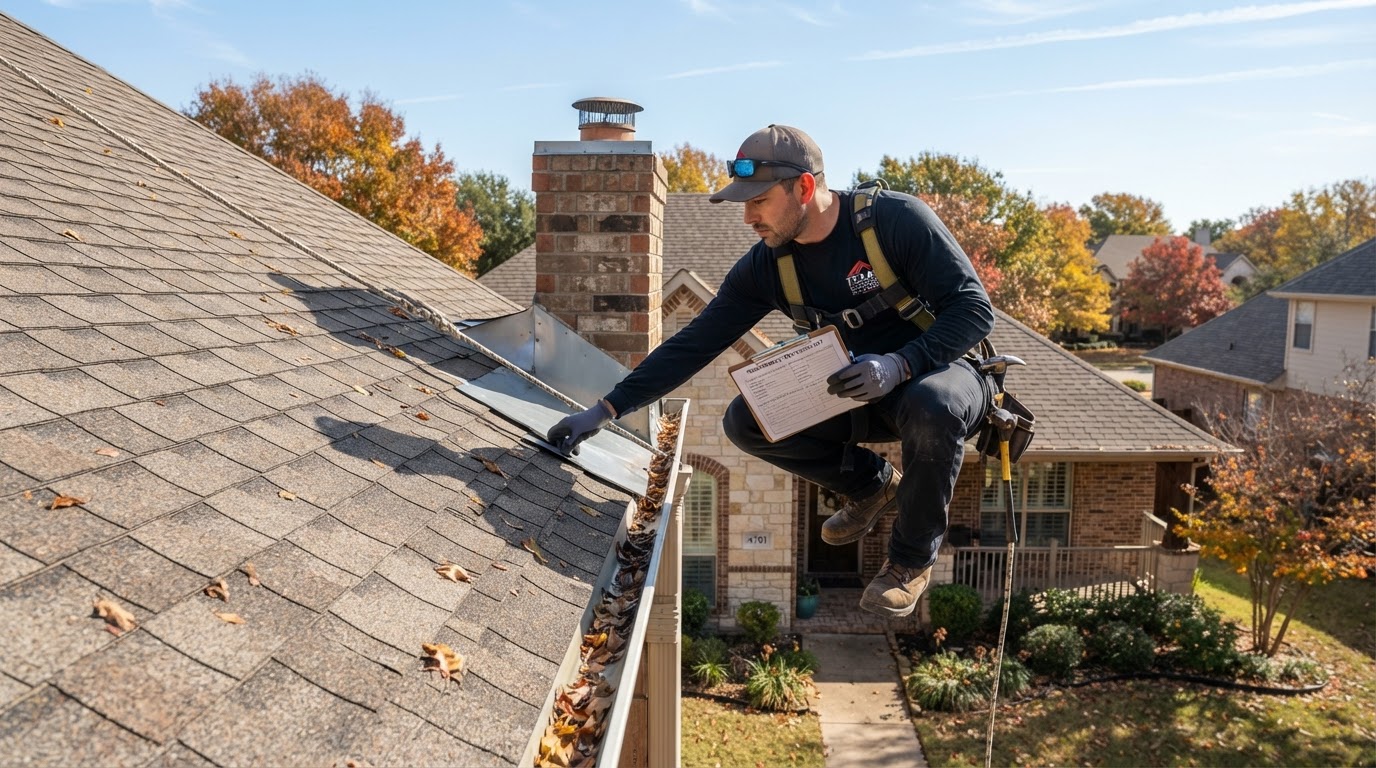
- Clean gutters again — fall leaves plus DFW's surprise downpours are a bad combo for clogged drainage.
- Reseal exposed nail heads and pipe boots — rubber pipe boots crack in Texas UV; catching them at year 8 beats replacing rotted decking at year 10. (Ask the Prosper homeowner.)
- Check for moss or algae — shaded north slopes in Plano and Frisco can grow algae streaks. They're cosmetic, but zinc strips prevent them.
- Review your insurance — fall is a good time to confirm your wind/hail deductible and coverage before the next spring season.
After Every Major Storm: The 48-Hour Check
After any hail event or 50+ mph wind in your area (Denton, McKinney, Aubrey — wherever you are):
- Walk the property — look for shingle pieces, granule piles at downspouts, dented gutters
- Check the attic for new leaks or daylight
- Photograph anything suspicious with a date stamp
- Call for a professional inspection if you see anything — or if neighbors are filing claims
Don't climb on the roof yourself. Steep, storm-damaged roofs are dangerous, and foot traffic can worsen bruised shingles.
*See anything in your 48-hour check — or just want a trained eye to confirm what you're seeing? We'll come out, get on the roof, and give you a straight answer with photos. Free, fast, and scheduled around the storm rush. Get a free inspection.*
What to Leave to the Professionals
DIY-friendly: gutter cleaning, branch trimming, ground-level visual checks, attic inspections.
Call a pro for: anything on the roof surface, flashing repairs, shingle replacement, ventilation work, and any post-storm assessment. The inspection is free — the peace of mind is real. There's no trophy for diagnosing your own roof from a ladder, and the emergency room is more expensive than our visit.
The best time to find a roof problem is on a sunny Tuesday. The worst time is during the storm that finds it for you.
Frequently Asked Questions
How often should I have my roof professionally inspected in DFW?
Twice a year — spring and fall — plus after any significant hail or wind event. Given North Texas weather, annual-only inspections leave too much to chance.
How much does roof maintenance cost in Dallas-Fort Worth?
Basic maintenance (gutter cleaning, minor resealing) runs $200–$500 per visit. Professional inspections from reputable local companies are typically free. Compare that to a $12,000+ premature replacement — or a $4,000 deck repair from a $400 boot.
Can maintenance really extend my roof's life?
Absolutely. Catching failing pipe boots, clogged drainage, and minor flashing issues early routinely adds 5+ years to a shingle roof's service life in North Texas.
Does my HOA handle any roof maintenance?
In single-family neighborhoods (Frisco, McKinney, Prosper, etc.), the roof is the homeowner's responsibility. Some townhome HOAs cover roofs — check your CC&Rs.
What voids my roof warranty?
Neglect is the big one — most manufacturer warranties require reasonable maintenance. Also: unauthorized repairs, pressure washing shingles, and installing satellite dishes or solar without proper flashing.
When's the last time someone really looked at your roof? Get a Free Inspection — our 20-point check covers everything on this list and more, with photos you'll actually understand.
Never miss a maintenance window: Join the Roofing Glory homeowner newsletter for seasonal reminders, storm alerts, and simple checklists timed to North Texas weather. Your roof will thank you.
Ready for a Free Roof Inspection?
Get a clear, written estimate after a free on-site inspection. Measure your roof and see your range online in minutes.
Get My Free Roof QuoteWritten by Roofing Glory for Glory Roofing and Construction, Corp. — serving Aubrey and North Texas with roof replacement, storm repair, and commercial roofing.
Get Roofing Insights Straight to Your Inbox
Join other North Texas homeowners and businesses. Get seasonal roofing tips, storm preparedness reminders, and honest guidance — tailored to the audience you choose below.