Metal Roofing vs. Shingles in Texas Heat: Which Lasts Longer?
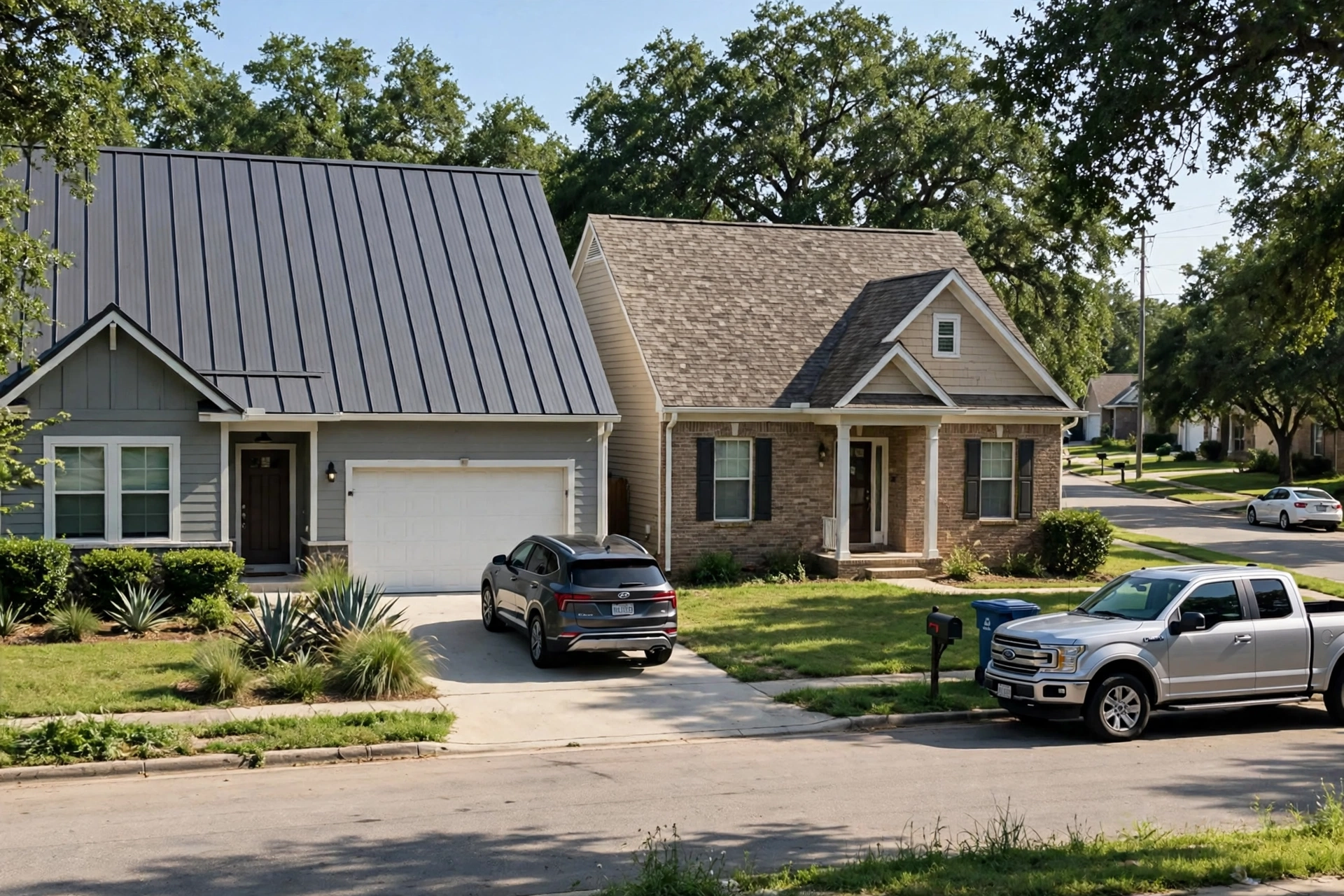
In Texas heat, a standing-seam metal roof lasts 40–70 years — roughly double the 20–30 year lifespan of architectural shingles. Metal also reflects solar heat, cutting summer cooling costs 10–25%. Shingles cost far less upfront ($12,000–$18,000 vs. $22,000–$38,000+ for metal in DFW), so the right choice depends on how long you plan to stay in your North Texas home.
The Upstairs Bedroom That Never Cooled Down
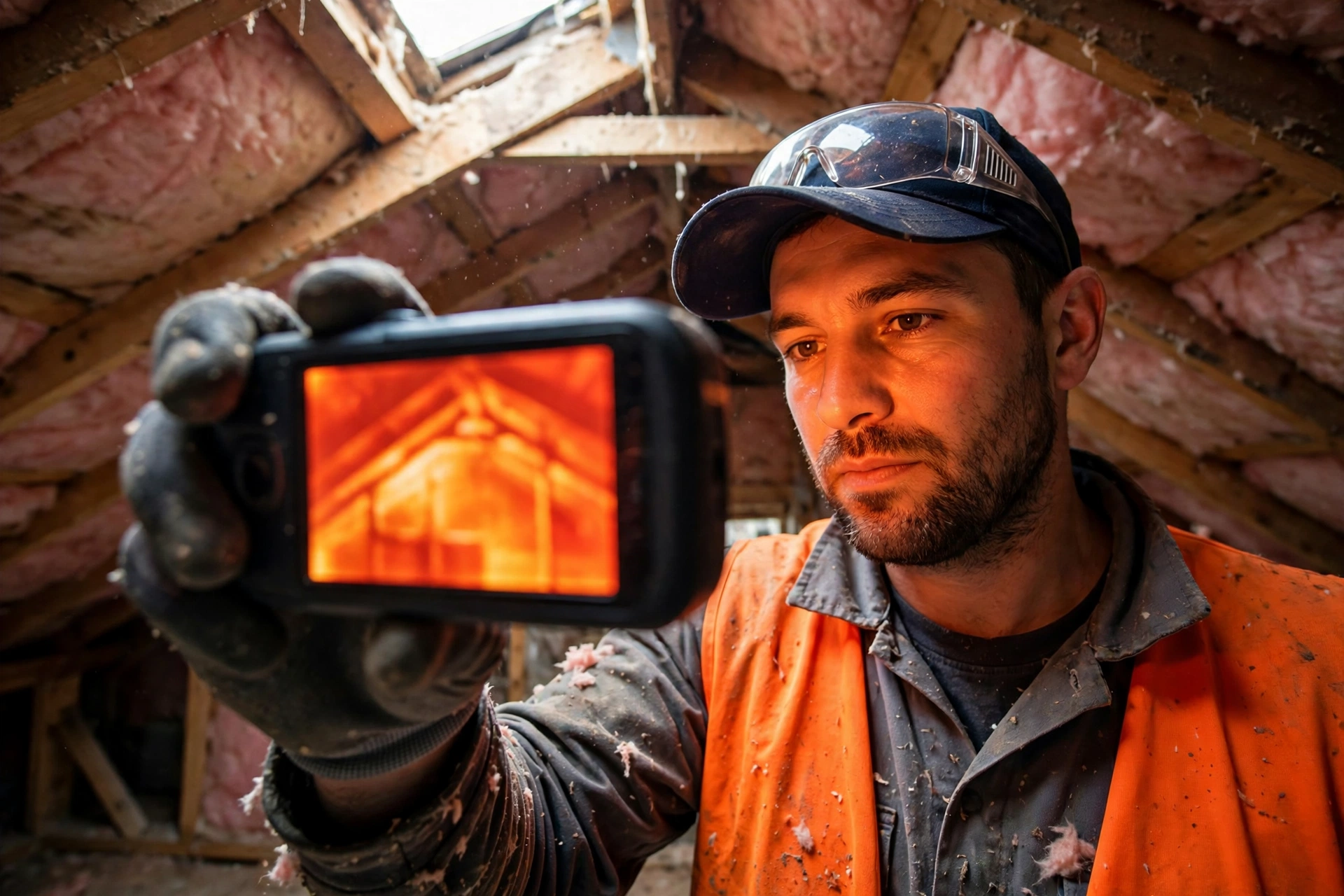
A family in McKinney called us about their electric bills, not their roof. Their upstairs bedrooms were saunas every August despite a brand-new AC. We put a thermometer in their attic at 3 p.m.: 158°F — hotter than the inside of a parked truck in a Frisco parking lot in August. Their dark shingle roof was absorbing heat all day and radiating it down all night. They didn't just need a new roof; they needed a roof that fought the Texas sun instead of surrendering to it. That story is why “which lasts longer” is the wrong first question here. The right one is: which one handles Texas?
The Texas Heat Problem
A DFW roof doesn't just sit in the sun — it bakes. Summer attic temperatures in Dallas, Fort Worth, and McKinney routinely top 150°F, and UV exposure here is brutal year-round. That sustained heat is the number-one aging factor for roofing materials in North Texas, ahead of even hail. So when homeowners in Frisco, Denton, and Prosper ask “which lasts longer,” heat performance is the real question.
In North Texas, your roof doesn't wear out. It bakes out.
Lifespan: The Decisive Difference
- Architectural shingles: 20–30 years in North Texas (heat and hail often end them closer to 20).
- Impact-resistant (Class 4) shingles: 25–35 years, with better hail survival.
- Standing-seam metal: 40–70 years — the panels outlast the fasteners and coatings, not the other way around.
- Stone-coated steel: 40–50 years, with a shingle-like look.
If you're planning to stay in your Aubrey or Celina home for decades, metal's lifespan advantage is hard to argue with. If you might sell in 7–10 years, shingles usually make more financial sense. Think of it like buying boots vs. sneakers for a decade of Texas summers — both cover your feet, but only one was built for the long walk.
Upfront Cost in DFW (2026)
For a typical North Texas single-family home:
- Architectural shingles: $12,000–$18,000 — 20–30 yr lifespan
- Class 4 impact-resistant shingles: $14,000–$20,000 — 25–35 yr lifespan
- Standing-seam metal: $22,000–$38,000+ — 40–70 yr lifespan
Metal costs roughly double upfront. But spread over its lifespan, metal often wins on cost-per-year — especially if you'd otherwise replace shingles twice.
Want your exact numbers, not a table's? Our free estimate calculator gives you an instant ballpark for your actual home in about 60 seconds — shingles and metal side by side. Try it here.
Energy Bills: Metal's Quiet Superpower
This matters enormously in Texas. Quality metal roofing with reflective coatings can cut summer cooling costs by 10–25%, according to Department of Energy data. In a DFW summer where AC runs five months straight, that adds up to thousands over the roof's life.
Shingles absorb heat; even “cool roof” rated shingles can't match metal's reflectivity. If your upstairs bedrooms in Plano or Frisco feel like saunas every August, your roof material is part of the story — and your attic thermometer would prove it.
Ventilation note: The rule is a ridge vent plus 1 sq ft of intake per 300 sq ft of attic — skip that and even a $35,000 metal roof will sweat. And on metal roofs specifically, ridge vents don't work; slantback 750s or power vents do the job.
Hail and Storms: Closer Than You'd Think
Conventional wisdom says metal dents in hail — and cosmetic denting can happen with large hail. But standing-seam metal won't crack, bruise, or lose granules the way shingles do, and it won't need replacement after storms that would total a shingle roof. Many metal roofs carry Class 4 impact ratings, which can also earn you an insurance discount. After a hailstorm, a metal roof owner watches the news. A shingle roof owner watches the sky.
Noise, Looks, and Other Concerns
- “Metal roofs are loud in rain.” Modern installations over solid decking with underlayment and attic insulation sound about the same as shingles. This myth comes from old barn roofing — your home isn't a barn.
- Aesthetics: Standing-seam gives a clean, modern look that suits newer Frisco and Prosper builds beautifully. Stone-coated steel mimics shingles, tile, or shake for traditional neighborhoods.
- Weight: Metal is actually lighter than shingles per square foot — no structural reinforcement needed.
The Honest Bottom Line
Choose architectural shingles (our best-value pick is IKO Cambridge) or Class 4 shingles if: budget matters most, you may sell within 10–15 years, or your HOA restricts metal (check first — some DFW HOAs do).
Choose metal if: this is your long-term home, you want the lowest lifetime cost, energy savings appeal to you, or you're tired of replacing shingle roofs after every hail season.
Still torn? That's normal — it's a 40-year decision. We'll bring actual material samples to your home, lay them on your driveway in the Texas sun, and let you feel the temperature difference yourself. No brochure can do that. Book a free inspection — and yes, we handle HOA approval paperwork too.
Either way, installation quality decides everything. A perfectly installed shingle roof outperforms a sloppy metal job every time — so vet your contractor first and your material second.
Frequently Asked Questions
Does a metal roof make my house hotter?
The opposite — reflective metal roofing reduces heat gain and lowers attic temperatures compared to dark shingles.
Will my HOA allow a metal roof in Frisco or McKinney?
It depends on the neighborhood. Many newer DFW HOAs allow standing-seam; some restrict it. Always check your HOA guidelines before committing — we can help with the approval paperwork.
Is metal roofing worth it in Texas?
For long-term homeowners, usually yes: 2–3x the lifespan, meaningful energy savings, strong hail performance, and potential insurance discounts offset the higher upfront cost.
Can you install metal over existing shingles?
Sometimes, but we generally recommend a full tear-off so we can inspect the decking — the same standard we'd apply to our own homes.
Weighing the decision? Get a Free Inspection — we'll assess your current roof, show you material samples, and give you honest side-by-side numbers for shingles vs. metal on your home.
Thinking long-term about your roof? Join the Roofing Glory homeowner newsletter for material guides, energy-saving tips, and North Texas roofing insights. Built for homeowners who do their homework.
Ready for a Free Roof Inspection?
Get a clear, written estimate after a free on-site inspection. Measure your roof and see your range online in minutes.
Get My Free Roof QuoteWritten by Roofing Glory for Glory Roofing and Construction, Corp. — serving Aubrey and North Texas with roof replacement, storm repair, and commercial roofing.
Get Roofing Insights Straight to Your Inbox
Join other North Texas homeowners and businesses. Get seasonal roofing tips, storm preparedness reminders, and honest guidance — tailored to the audience you choose below.