
How to File a Roof Insurance Claim in Texas: Step-by-Step Guide
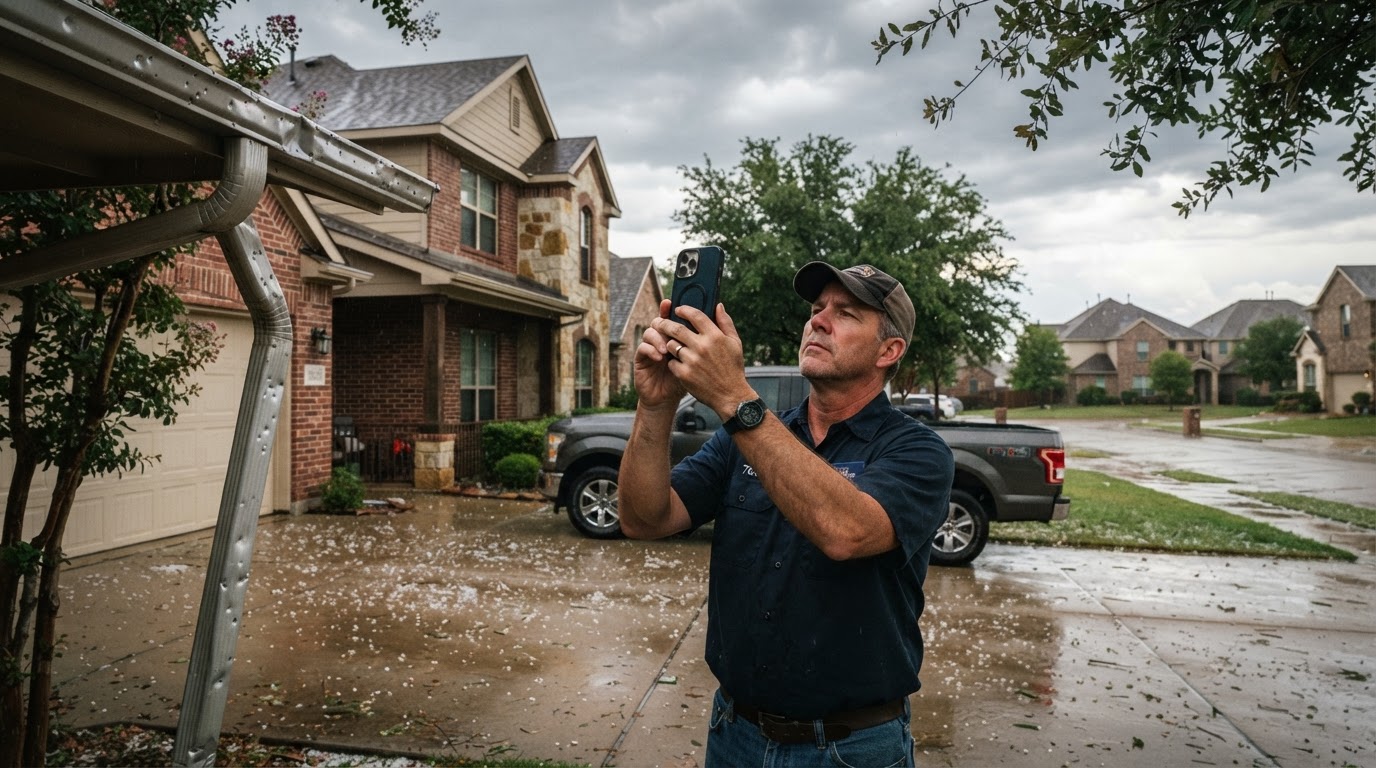
To file a roof insurance claim in Texas: (1) document damage with photos right after the storm, (2) get a free professional roof inspection, (3) call your insurer to open the claim, (4) meet the adjuster on-site with your contractor present, (5) review the settlement scope, and (6) schedule repairs once approved. In Texas you generally have one year from the storm date to file — but sooner is always better.
The Claim That Died in a Drawer
A homeowner in Denton waited eleven months after a hailstorm to call anyone. By the time an adjuster came out, a second storm had hit, the original damage was impossible to separate from the new, and the claim was denied over causation disputes. Eleven months of waiting turned a covered $14,000 roof into a $14,000 out-of-pocket bill. The painful part? A free inspection in week one would have documented everything and the claim would likely have sailed through. Insurance isn't a savings account you visit when convenient — it's a contract with a clock. This guide is about beating that clock.

Before You Start: Know Your Policy
Dig out your homeowner's policy (or log into your insurer's portal) and confirm three things:
- Your deductible — in Texas, many policies now have a separate, higher wind/hail deductible (often 1–2% of dwelling coverage). On a $400,000 home, a 2% deductible is $8,000. Know this number before anything else.
- ACV vs. replacement cost — Replacement Cost Value (RCV) policies pay for a full new roof; Actual Cash Value (ACV) policies subtract depreciation, leaving you with a bigger out-of-pocket gap. This is the single biggest factor in what your claim is worth.
- Filing deadline — Texas generally allows one year from the date of loss, but some policies require prompt notice. Don't sit on it.
Your deductible is the cover charge. Everything after that is what insurance is actually for — make sure the damage clears it before you file.
Step 1: Document the Damage Immediately
Right after the storm (once it's safe):
- Photograph dented gutters, downspouts, window screens, and AC units
- Photograph any visible shingle damage from the ground
- Note the storm date — check news reports for hail maps of your area (Denton, Frisco, McKinney, etc.)
- Save any hailstones in the freezer with a ruler for scale (adjusters love this — and your kids will think it's the coolest science project ever)
You don't need to climb on the roof. Ground-level documentation plus the storm date is enough to start.
Step 2: Get a Professional Inspection First
This is the step most homeowners skip — and it's the most important. A qualified local roofer will:
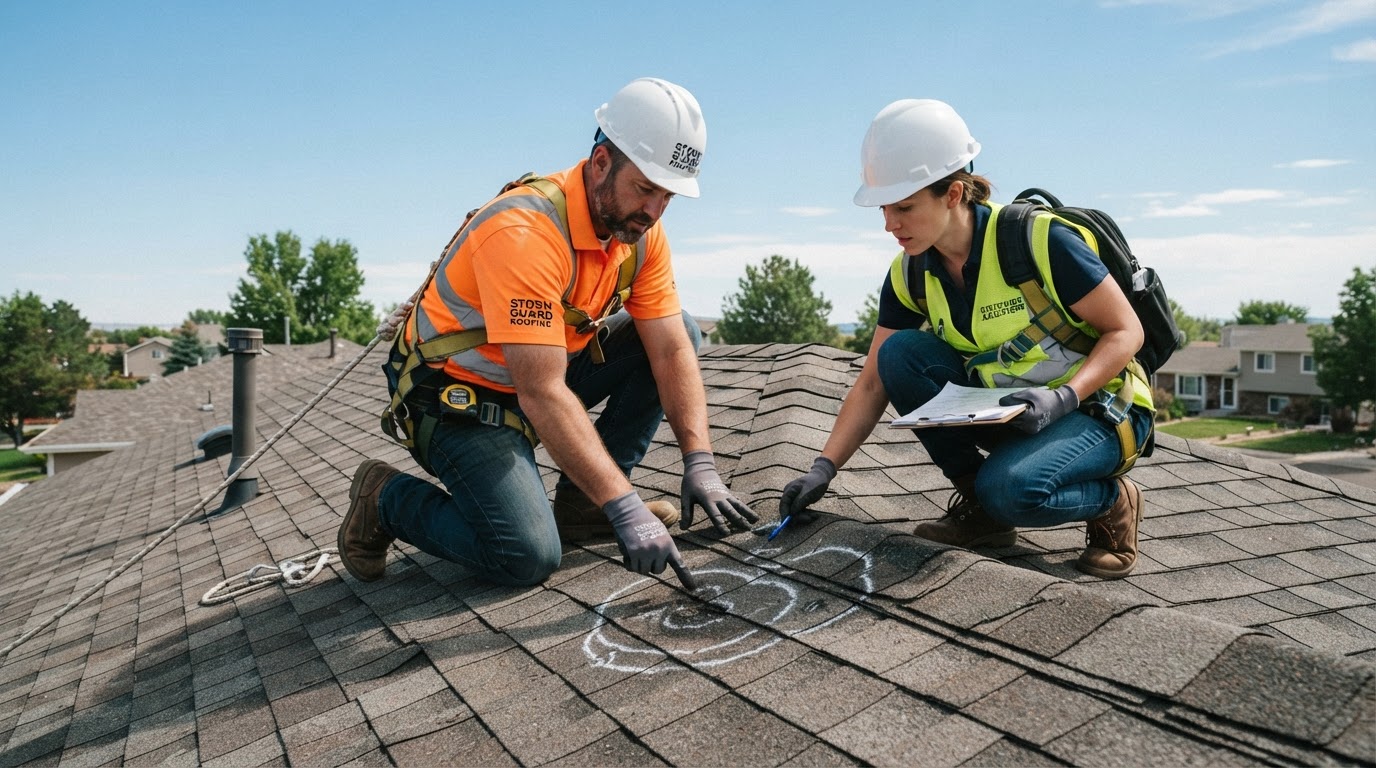
- Get on the roof and document every hail bruise, cracked shingle, and damaged flashing with photos
- Measure the roof and note its age and material
- Give you an honest assessment: is this claim-worthy damage, or normal wear?
Why this order matters: if you file first and the adjuster finds nothing, you've burned a claim on your record (CLUE report) for zero payout. An inspection first means you file with confidence — or save yourself the trouble if the damage isn't there.
*This is the moment to call us, before you call your insurer. We'll document everything, give you an honest read on whether a claim makes sense, and if the damage isn't there, we'll tell you that too — filing a doomed claim helps no one. Get your free inspection.*
Step 3: Call Your Insurance Company
Call the claims number on your policy and have your policy number handy. Here's a script that works:
“I've had a licensed roofer inspect and document functional hail/wind damage to my roofing system and soft metals. I'd like to file a claim for storm damage and request an adjuster inspection.”
One important tip: let the insurance company provide the storm date. If they ask when the storm happened and you're not sure, “I don't know” is an acceptable answer — don't guess a date that could muddy your claim.
You'll get a claim number. Write it down. The insurer will assign an adjuster, usually within a few days to two weeks in DFW (longer right after a major metro-wide hail event).
Step 4: Meet the Adjuster — With Your Contractor There
This is where claims are won or lost. Have your roofing contractor present when the adjuster inspects. A good contractor will walk the roof with the adjuster, point out documented damage, and make sure nothing gets missed. Adjusters are human; a second set of trained eyes protects your interests.
*We'll be on that roof with the adjuster at no charge to you. We've done this hundreds of times across DFW — we know what adjusters look for, what they miss, and how to make sure your damage gets a fair hearing. You shouldn't walk into the most important meeting of your claim alone. Start with a free inspection and we'll take it from there.*
What the adjuster produces: a scope of loss with line-item pricing (usually Xactimate). Review it carefully — it should account for the full slope replacements needed, not just spot repairs, when damage is widespread.
The adjuster meeting is the whole ballgame. Never walk onto your own roof's biggest day without your contractor beside you.
The Matching Question
One thing Texas homeowners should know: insurance here doesn't pay for matching — it pays for the same likeness, kind, and quality. An argument can be made that a visible line-of-sight mismatch decreases property value, but a patchwork of spot repairs isn't permitted either. This is exactly why the damage threshold matters: when hail covers over 75% of your roof or hits multiple slopes, full replacement is the right call — not a repair that leaves your roof looking quilted.
Step 5: Review the Settlement and Understand Depreciation
Your first check is typically the ACV payment (replacement cost minus depreciation minus deductible). Once the work is complete and invoiced, you can recover the withheld depreciation — that's the second check. Key points:
- You must complete the work to recover full depreciation
- Keep every invoice and receipt
- Your contractor's final invoice should match the approved scope
Step 6: Schedule the Work and Get It Done Right
Once approved, schedule with your contractor promptly. Texas insurers can question delays. A reputable DFW roofer will:
- Build to the approved scope (no cutting corners to pocket the difference)
- Handle any supplement requests if hidden damage appears during tear-off
- Provide final documentation for your depreciation recovery
Mistakes That Get Texas Roof Claims Denied or Shortchanged
- Waiting too long — filing 11 months after the storm invites disputes about which storm caused what. (Remember Denton.)
- Filing without an inspection — a denied claim still shows on your CLUE report for years.
- Signing with a storm chaser who pressures you to sign over benefits (assignment of benefits) — you lose control of your own claim.
- Accepting the first scope without review — adjusters miss things; supplements are normal and legitimate.
- Paying your deductible to the contractor under the table — “we'll cover your deductible” is insurance fraud in Texas. Don't do it. Anyone who offers is telling you exactly who they are.
*Feeling overwhelmed? That's normal — most homeowners file one roof claim in their lives; we guide people through them every week. Call on us at any step, even mid-claim. We'd rather help you fix a shaky claim than watch you lose it. Get a free inspection.*
Frequently Asked Questions
Will filing a roof claim raise my Texas homeowner's insurance rates?
Texas law prohibits insurers from surcharging you for weather-related (act of God) claims. Your rate won't increase because of a hail claim.
How long does a roof insurance claim take in Texas?
Simple claims: 30–60 days from filing to approval. After major DFW hail events with adjuster backlogs, 60–120 days is common. Having a contractor present at inspection speeds things up.
What if my claim is denied but my roof is clearly damaged?
You can request a re-inspection, hire a public adjuster, or invoke your policy's appraisal clause. A contractor's thorough photo documentation is your best ammunition — which is why step 2 comes before step 3, always.
Do I have to use my insurance company's preferred contractor?
No. In Texas you have the right to choose your own contractor. Insurer “preferred” lists are about the insurer's convenience, not your roof's quality.
Dealing with storm damage right now? Get a Free Inspection — we'll document everything, tell you honestly if a claim makes sense, and stand with you through the adjuster meeting if you file.
Don't face the next storm unprepared: Join the Roofing Glory homeowner newsletter for claim guides, hail-season alerts, and Texas insurance tips. Knowledge is leverage.
Ready for a Free Roof Inspection?
Get a clear, written estimate after a free on-site inspection. Measure your roof and see your range online in minutes.
Get My Free Roof QuoteWritten by Roofing Glory for Glory Roofing and Construction, Corp. — serving Aubrey and North Texas with roof replacement, storm repair, and commercial roofing.
Get Roofing Insights Straight to Your Inbox
Join other North Texas homeowners and businesses. Get seasonal roofing tips, storm preparedness reminders, and honest guidance — tailored to the audience you choose below.