
Hail Damage Roof Repair in North Texas: What Homeowners Need to Know

After a North Texas hailstorm, look for dented gutters and downspouts, bruised or missing shingle granules, cracked shingles, and dents on vents or flashing — but much hail damage is invisible from the ground. The safest move is a free professional inspection within days of the storm, since Texas policies typically give you about one year to file a hail claim.
The Storm That Looked Like Nothing
After a spring storm rolled through Celina a couple of years back, a homeowner told us his roof “looked fine.” From the driveway, it did. Up close, though, the shingles were bruised across three slopes — granules knocked clean off in hundred of tiny impact points, like a golf ball hammered into a Frisco trampoline a thousand times over. His roof was functionally 10 years older than it had been that morning, and you'd never know standing on the sidewalk. That's the thing about North Texas hail: the damage it does best is the damage you can't see.
Why North Texas Roofs Take Such a Beating
The Dallas-Fort Worth metroplex sits squarely in “Hail Alley.” Every spring, homeowners from Denton to McKinney to Celina watch the sky and wonder if this is the storm that gets their roof. It's not paranoia — North Texas sees some of the highest hail claim volumes in the country, and a single storm can damage thousands of roofs across Frisco, Plano, and Prosper in one afternoon.
Here's the tricky part: hail damage often doesn't look dramatic. Your roof can be functionally compromised — granules knocked loose, shingles bruised, underlayment exposed to future leaks — while looking basically fine from the driveway.
Hail damage is like a bruised apple: perfect on the outside, mush on the inside. Your roof can look fine from the driveway and still be compromised.
Signs of Hail Damage (What to Look For)
From the ground (safe checks anyone can do)
- Dented gutters, downspouts, or window screens — if the soft metals are dented, your shingles took hits too.
- Dents on your AC unit or patio furniture — same logic.
- Granules piling up at downspout exits — hail knocks protective granules off shingles; you'll see the sandy residue. Think of granules as your shingles' sunscreen — once it's gone, the Texas sun does the rest.
- Visible shingle damage — cracked, torn, or missing shingles after a storm warrant an immediate call.
Not sure what you're looking at? That's the most common thing we hear. Roofing Glory offers free storm inspections across DFW — we'll tell you straight whether it's cosmetic or urgent, with photos you can actually understand. Get a free inspection.
What a professional finds on the roof
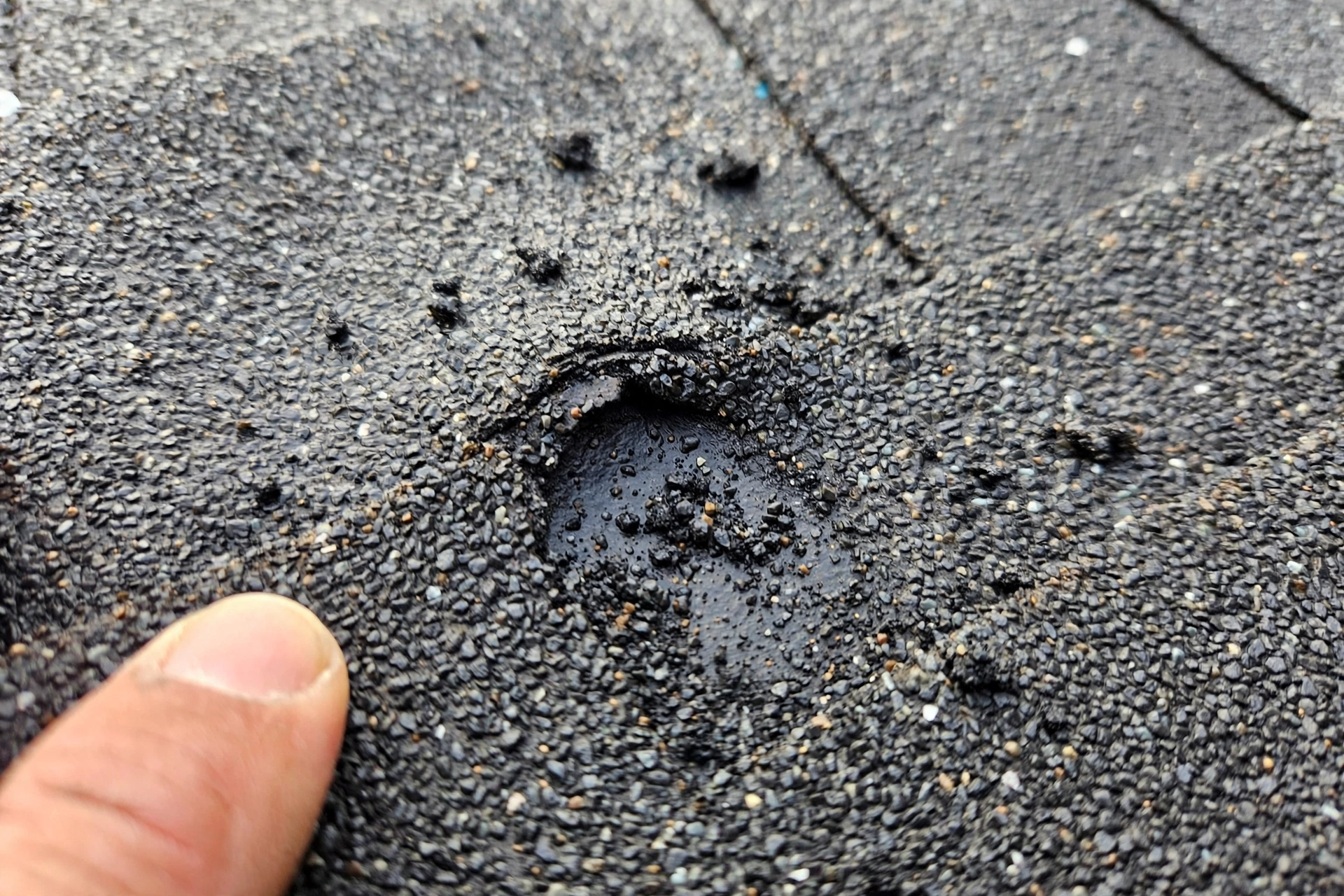
- Bruised shingles — hailstones compress the shingle mat; the bruise may not tear through immediately but it shortens the shingle's life and voids manufacturer warranties.
- Fractured fiberglass mats — visible as dark spots where granules are gone.
- Damaged flashing and vents — cracked rubber boots around pipes are a classic leak source after hail. That said, most homes don't need all-new flashing — if it's not rusted and was installed properly, sound flashing can be reused.
- Compromised ridge caps — the most exposed part of the roof takes the hardest hits.
Repair vs. Full Replacement: How the Call Gets Made
Small, isolated hail damage on a younger roof can often be repaired — replacing individual shingles or sections. But when damage covers over 75% of the roof — or hits multiple slopes — insurance and manufacturers usually call that a replacement, not a repair. That's the threshold that matters, and it's why a full-slope assessment beats a quick glance.
A good contractor documents everything with photos and gives you a straight recommendation. Be wary of anyone who declares you “definitely need a full replacement” before climbing the ladder — or anyone who says “it's fine” without getting on the roof. Both answers, given blind, are guesses. You deserve better than guesses about the thing keeping rain off your kids' beds.
The Insurance Clock Is Ticking
In Texas, you generally have one year from the date of the storm to file a hail damage claim, though sooner is always better. Waiting risks:
- Secondary water damage that insurers may dispute
- A second storm muddying which damage came from which event
- Missing the window entirely and paying out of pocket
The smart sequence after a hailstorm: inspection first, then claim. A documented professional inspection gives your claim a foundation — photos, measurements, and a damage assessment an adjuster can work with. And here's a promise: if you do file, we'll meet your adjuster on the roof at no charge. Claims are won or lost at that meeting, and you shouldn't walk in alone.
File the claim with evidence, not hope. An inspection first means you file with confidence — or save yourself the trouble.
Watch Out for Storm Chasers
After every major DFW hail event, out-of-state “storm chaser” companies flood neighborhoods in Frisco, McKinney, and Denton with door-knockers. Red flags: no local office, high-pressure “sign today” tactics, asking you to sign over insurance benefits, or offering to “cover your deductible” (that's insurance fraud in Texas).
Choose a local North Texas company with a physical address, Texas references, and a warranty they'll still be around to honor. Ask one question: “Where will your office be in five years?” If they can't answer, neither can their warranty.
Frequently Asked Questions
How big does hail need to be to damage a roof?
Hail as small as 1 inch (quarter-sized) can bruise shingles; 1.75 inches and up (golf ball+) commonly causes functional damage. But wind-driven smaller hail can still do real harm.
Will my insurance rates go up if I file a hail claim?
Texas law prohibits insurers from surcharging you for weather-related claims. Hail claims are considered “acts of God,” not at-fault events.
How long do I have to file a hail claim in Texas?
Most policies allow up to one year from the storm date, but check your specific policy — some have shorter notice requirements. File promptly.
Can hail damage be repaired, or does the whole roof need replacement?
It depends on the extent. Isolated damage on a young roof can be repaired. Widespread bruising across slopes usually means replacement — which is what insurance is for.
What does a hail damage inspection cost?
Ours is free. Any reputable DFW roofer should inspect storm damage at no charge — it's how the honest ones earn the job.
Just had hail in your neighborhood? Get a Free Inspection — we'll document everything with photos and give you a straight answer on repair vs. claim. Fast scheduling after storms.
Storm-season ready: Join the Roofing Glory homeowner newsletter for hail alerts, post-storm checklists, and claim tips for North Texas. Be prepared before the next storm hits.
Ready for a Free Roof Inspection?
Get a clear, written estimate after a free on-site inspection. Measure your roof and see your range online in minutes.
Get My Free Roof QuoteWritten by Roofing Glory for Glory Roofing and Construction, Corp. — serving Aubrey and North Texas with roof replacement, storm repair, and commercial roofing.
Get Roofing Insights Straight to Your Inbox
Join other North Texas homeowners and businesses. Get seasonal roofing tips, storm preparedness reminders, and honest guidance — tailored to the audience you choose below.